


Wanderboat: Local Guide
4.116.00 Reviews
App Specs
- Version
- 1.5.5
- Updated On
- License
- Free
- Downloads
- 100,000+
- Developer
- UTA AI Inc.
- Categories
- Travel & Local
- Platform
- Android
Screenshots
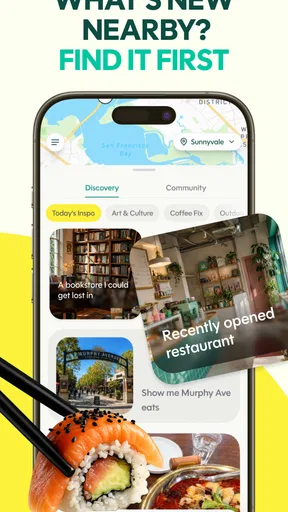
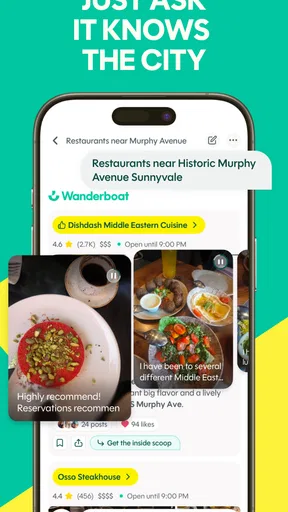
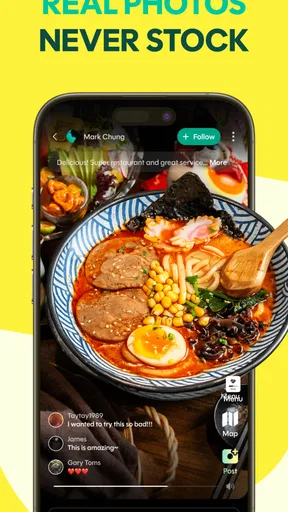
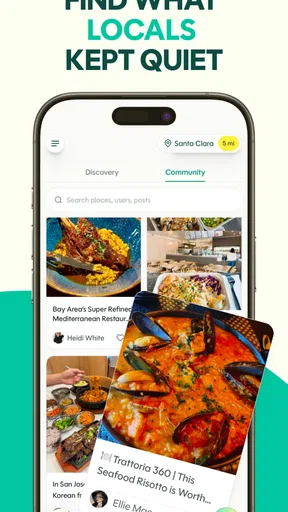
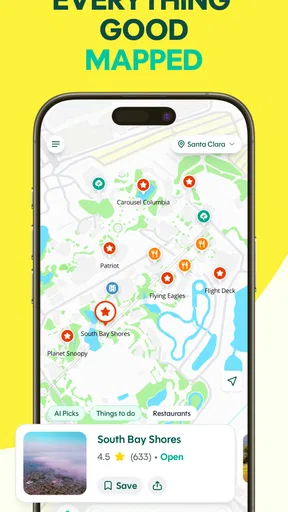
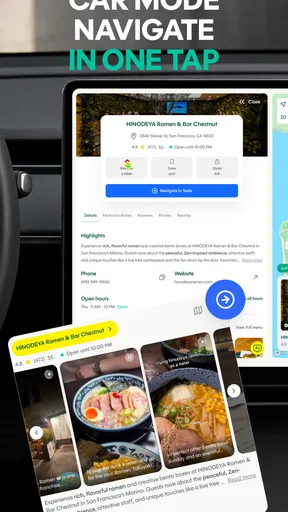
 Analysis by AppCompare
I opened Wanderboat: Local Guide with a fairly ordinary travel problem: I wanted help turning a vague idea into something I could actually use while deciding where to go. That is the situation where this app makes the most sense. Rather than treating travel planning as a long search through disconnected pages, it presents itself as an AI-assisted companion for exploring places and shaping a trip around your interests. Its store summary, “Live your best life,” is broad, but the practical appeal is easier to understand: it aims to reduce the blank-page feeling that comes before a day out or a getaway.
After spending time with it, my view is positive but measured. Wanderboat: Local Guide is a free travel and local app from UTA AI Inc., and its strongest quality is the conversational starting point. I can begin with an incomplete request instead of knowing the exact neighborhood, attraction, or itinerary I want. That is useful when the destination is unfamiliar or when I am trying to make a plan with another person whose preferences are different from mine.
The app is available to an Everyone audience, runs on Android 10 or later, and the current version is 1.5.5. It has passed the stage of being an obscure experiment, with over one hundred thousand installs, while its average stands at 4.1 from a little over two hundred ratings. Those figures suggest a real user base, though not the same level of public track record as the biggest mapping or booking services.
From a vague idea to a usable local plan
I find that a useful local plan starts with a decision I can act on, not an exhaustive list of attractions. In this section, I look at how a little context—time, pace, and who is coming along—can make Wanderboat’s suggestions easier to judge and shape. That naturally leads to the next question: how quickly the app can help turn that first idea into a workable plan.
The starting condition matters more than the destination
My first useful discovery was that the quality of the experience depends heavily on how I frame the request. “What should I do?” is too loose to produce a truly personal result from almost any recommendation tool. A better starting point includes the place, available time, mood, and practical limits: a relaxed afternoon near the city center, an inexpensive food-focused evening, or a rainy-day plan with minimal walking.
That small change turns the app from a source of random inspiration into a planning workspace. I would not use it as a replacement for a map when I already know the exact address I need. I would use it earlier, when I am comparing possibilities and need help narrowing them down. The distinction is important because this is not primarily a turn-by-turn navigation tool in my workflow; it is more valuable as a layer for deciding what deserves attention.
For a traveler who has just arrived, the same approach works with a local question. Instead of asking for every attraction in town, I can describe the kind of experience I want and then react to the suggestions. That makes the interaction feel closer to asking a knowledgeable friend than opening a conventional directory and sorting through a wall of listings.
Worth Reading Before You Choose

Flipboard Shows What News Apps Must Do Beyond the Feed

Switching to Android Auto Means Rethinking Your Driving Routine

Google Calendar Makes a Crowded Week Easier to Manage

Ludo King Makes the Most of the Minutes Between Plans

Baby Panda World Brings Quick Play to Modern Phones, but Its Game Library Feels Busy

ESPN’s Live Game View Makes Following Close Games Easier
A practical step-by-step workflow
I recommend beginning with one clear objective rather than trying to plan an entire vacation in a single message. First, identify the immediate decision: where to eat, what to see nearby, how to spend a free morning, or how to combine several interests. Next, add constraints that affect the outcome. Time of day, preferred pace, indoor or outdoor activities, and the people joining you can be more useful than a long list of general preferences.
Once the app returns ideas, I treat the first response as a draft. The helpful part of an AI guide is the ability to refine the request without restarting the whole search. I can push the plan toward quieter places, shorten it, make it more suitable for a group, or ask for alternatives when the first direction does not feel right. That back-and-forth is the central workflow, and it is where Wanderboat earns its place beside ordinary search.
The third step is to challenge the plan. I would ask which suggestion is easiest to reach, which stop could be removed if time runs short, and what order makes the day less tiring. This is a non-obvious but important habit: an attractive list is not automatically a good itinerary. A plan with too many separate stops can look impressive in text while becoming frustrating in real life.
Finally, I move from discovery to verification. Before leaving, I would check the practical details that matter on the day itself, such as current opening information, route conditions, reservation requirements, and whether a recommendation still fits the schedule. An AI-generated suggestion can help me decide where to investigate, but I would not let it be the only authority for time-sensitive travel details.
How the handoffs feel in real use
The most useful handoff is from conversation to personal decision-making. Wanderboat can give me a set of directions, but I still need to choose what matches my energy, budget, companions, and tolerance for uncertainty. That is not a flaw unique to this app; it is the normal boundary between recommendation and action. The advantage is that the app helps me reach a shortlist faster.
The next handoff is from Wanderboat to the tools I already use. If I need precise navigation, I may switch to a dedicated map. If I need a confirmed reservation, I may use the venue’s own channel. If I need transport timing, I may consult a transit service. In my view, this makes the app complementary rather than universal. It helps answer “what sounds right?” more effectively than “what is the exact operational detail right now?”
There is also a social handoff. When planning with friends, I can use the app to create a common starting point, then discuss the suggestions outside it. This is particularly useful when one person wants food, another wants culture, and someone else wants a low-effort route. The app does not remove the group conversation, but it can give that conversation something concrete to react to instead of leaving everyone to search separately.
An everyday scenario where it earns its keep
Imagine I have a free Saturday in a city I do not know well. I want coffee, one interesting cultural stop, and dinner, but I do not want to spend the whole day crossing town. I would start by telling Wanderboat the area I am staying in, the relaxed pace I want, and the fact that the plan should work for a small group. Then I would ask it to reduce unnecessary travel and offer a backup if the weather changes.
From there, I would select the most appealing route rather than accepting every recommendation. I might ask for a shorter version, then use the result to investigate the individual venues and confirm their practical details. If the first proposal leans too heavily toward famous attractions, I would steer it toward local character; if it becomes too ambitious, I would remove a stop. The outcome is not simply a list. It is a workable outline that gives the day shape without locking me into a rigid schedule.
This workflow also exposes the app’s main strength: it lowers the effort needed to move from “we should do something” to “here are two realistic options.” For spontaneous plans, that reduction in friction can be more valuable than an enormous database of places that I must sort manually.
Three ways to get more value than a generic search
- Use constraints as steering controls. Mention pace, walking tolerance, atmosphere, and the people involved. These details help the conversation move toward a plan that fits real life instead of producing a generic sightseeing list.
- Ask for a fallback before you need one. A backup route or alternative type of activity is more useful when prepared in advance, especially for a day that could change because of weather, energy, or availability.
- Optimize for removal, not addition. After receiving a plan, ask which stop is least essential. Cutting one weak link often makes the entire outing more enjoyable than adding another recommendation.
- Separate inspiration from confirmation. Let the app help with discovery, then verify the details that can change. This handoff prevents a polished suggestion from becoming a disappointing arrival.
These habits also reveal a trade-off. The more open-ended the request, the more interpretation the app has to make. That can be convenient when I want ideas, but it can also produce a result that feels plausible without matching my exact priorities. Specific prompts require a little more effort at the start, yet they usually save time later.
Where the flow breaks
The first weak point is the boundary between recommendation and certainty. Travel information changes, and a conversational answer can sound confident even when I still need to check the details. I would be uncomfortable relying on any AI guide alone for a tightly timed connection, a booking-dependent activity, or a venue where arriving without confirmation would cause a problem.
The second weak point is precision. Dedicated map and local-search apps are usually better when I need an exact location, a reliable route, current business information, or a fast comparison of nearby options. Wanderboat is more appealing when the question is open-ended and human: what kind of afternoon would suit me, or how can I combine several interests without making the day exhausting?
The third is the need for active editing. I do not think the best experience comes from entering one sentence and following the result blindly. The app rewards users who respond to the first answer, add context, and remove unsuitable suggestions. Someone looking for a fully automatic itinerary may find that extra steering inconvenient.
There is a similar limitation for highly specialized travel. If I need detailed accessibility planning, complex transport coordination, formal booking management, or a precise record of reservations, I would choose dedicated services designed around those tasks. Wanderboat can help me think through the shape of the trip, but it should not be mistaken for every travel tool combined into one.
Who should try it, and who should skip it
I would recommend Wanderboat to curious travelers, spontaneous weekend planners, newcomers exploring a city, and anyone who gets stuck at the research stage. It is especially suitable for people who prefer asking follow-up questions over filtering dozens of categories. Its free price also makes it easy to test without committing money, and the Everyone rating keeps its audience broad.
I would be more cautious about recommending it to someone who already has a fixed itinerary and only needs navigation, bookings, or live transport updates. In that case, a conventional map or specialist travel service may be faster and more dependable. I would also skip it as the sole planning tool for trips where every minute, transfer, or reservation matters.
The app’s rating of 4.1 gives me a generally favorable signal, but I would read it as encouragement to try rather than proof that every recommendation will fit every traveler. With 15 written reviews, the public conversation around it is still relatively small. That makes personal testing worthwhile, particularly if the way I travel depends on details that an AI guide may interpret differently from me.
My final take on the outcome
Wanderboat: Local Guide succeeds when I use it as the first stage of a travel decision, not the final authority on every practical detail. It helps transform an undefined wish into a shortlist, then into a flexible outline, and finally into a plan I can verify with the right specialist tools. That end-to-end path is its real value.
I like the app because it meets me before I have perfect information. I can start with a mood or a loose idea, refine the direction, and avoid spending an evening jumping between unrelated searches. The experience is most rewarding when I remain involved: I provide useful constraints, question the suggestions, and confirm anything time-sensitive.
My recommendation is therefore straightforward: try it for discovery, local exploration, and low-pressure itinerary building. Keep a map, venue source, or booking service ready for the final handoff. If that division of labor suits you, this free Travel & Local app from UTA AI Inc. is a practical companion with room to grow, rather than a replacement for the established tools you already trust.
Pros
- Personalized ideas make discovering nearby places quick and convenient.
- Useful for finding restaurants
- attractions
- and activities in one app.
- Visual recommendations make it easy to compare potential destinations.
- Helpful for planning spontaneous outings or short local trips.
- Can inspire less touristy experiences beyond the usual search results.
Cons
- Recommendation quality may vary significantly between different cities.
- Some listings may have outdated details
- hours
- or availability.
- Heavy reliance on location access can affect privacy-conscious users.
- Popular destinations may receive more attention than independent businesses.
- A stable internet connection is often needed for complete recommendations.
FAQs for Wanderboat: Local Guide
What is Wanderboat: Local Guide, and what can I use it for?
Wanderboat: Local Guide is a travel-planning and discovery app designed to help you find interesting places, activities, restaurants, attractions, and things to do in a destination. It can be useful when planning a complete trip or when you are already exploring a city and need quick ideas nearby. The app is especially helpful for discovering experiences beyond the most obvious tourist attractions.
Does Wanderboat: Local Guide create personalized travel recommendations?
The app is designed to make trip discovery more personalized by using information such as your destination, interests, preferred activities, and travel plans. Recommendations may help you compare different types of experiences, from food and sightseeing to entertainment and outdoor activities. However, results can vary depending on the city, available local information, and how clearly you describe what you want to do.
Can I use Wanderboat: Local Guide to plan an entire itinerary?
Yes, Wanderboat can be used as a starting point for organizing a trip itinerary. You can explore destinations, collect places that interest you, and arrange ideas around your available time. It is best viewed as a flexible planning companion rather than a guaranteed schedule, because opening hours, ticket availability, transportation conditions, weather, and reservations can change after recommendations are displayed.
Is Wanderboat: Local Guide free to download and use?
Wanderboat: Local Guide may be available to download without an upfront charge, but users should check the current listing in the Google Play Store or Apple App Store for the latest pricing details. Some features, content, or services may depend on the app’s current business model, account requirements, or optional purchases. Always review the store page and subscription terms before confirming any payment.
Does Wanderboat provide accurate opening hours, prices, and availability?
Wanderboat can be useful for discovering places and gathering travel ideas, but its information should not be treated as a final authority. Business hours, admission prices, menus, reservations, temporary closures, and event schedules can change frequently. Before visiting, it is sensible to verify important details through the venue’s official website, social media page, or a direct phone call, particularly during holidays or peak travel periods.


